Textiles • Everyday care
Inside Coyuchi Bath Robes: Cotton Terry, Texture, and Everyday Comfort
A bath robe is a small shelter made of cloth: something to reach for after a shower, on a quiet morning, or while the bathroom mirror clears. Its comfort depends on more than heft. Cotton terry loops, fabric density, finishing, fit, and care all shape how a robe feels against the skin and how well it serves from one wash to the next.
The appeal of a garment between bath and day
There is a brief interval after bathing when the day has not quite begun again. Water beads on the skin; a towel has done its work, but clothing still feels premature. A robe fills that pause. It offers coverage and warmth, absorbs stray moisture, and allows the body to settle before the next task. In that ordinary ritual, construction matters. The right robe feels comfortable without becoming cumbersome, and useful without asking for special attention.
For shoppers exploring Coyuchi bath robes, the most helpful questions are practical: What kind of terry is used? How does the fabric feel when dry and when damp? Is the robe intended for quick post-shower use, relaxed lounging, or both? And will its care instructions fit the household’s laundry routine? These considerations reveal more than a product name or a single fabric-weight figure can.
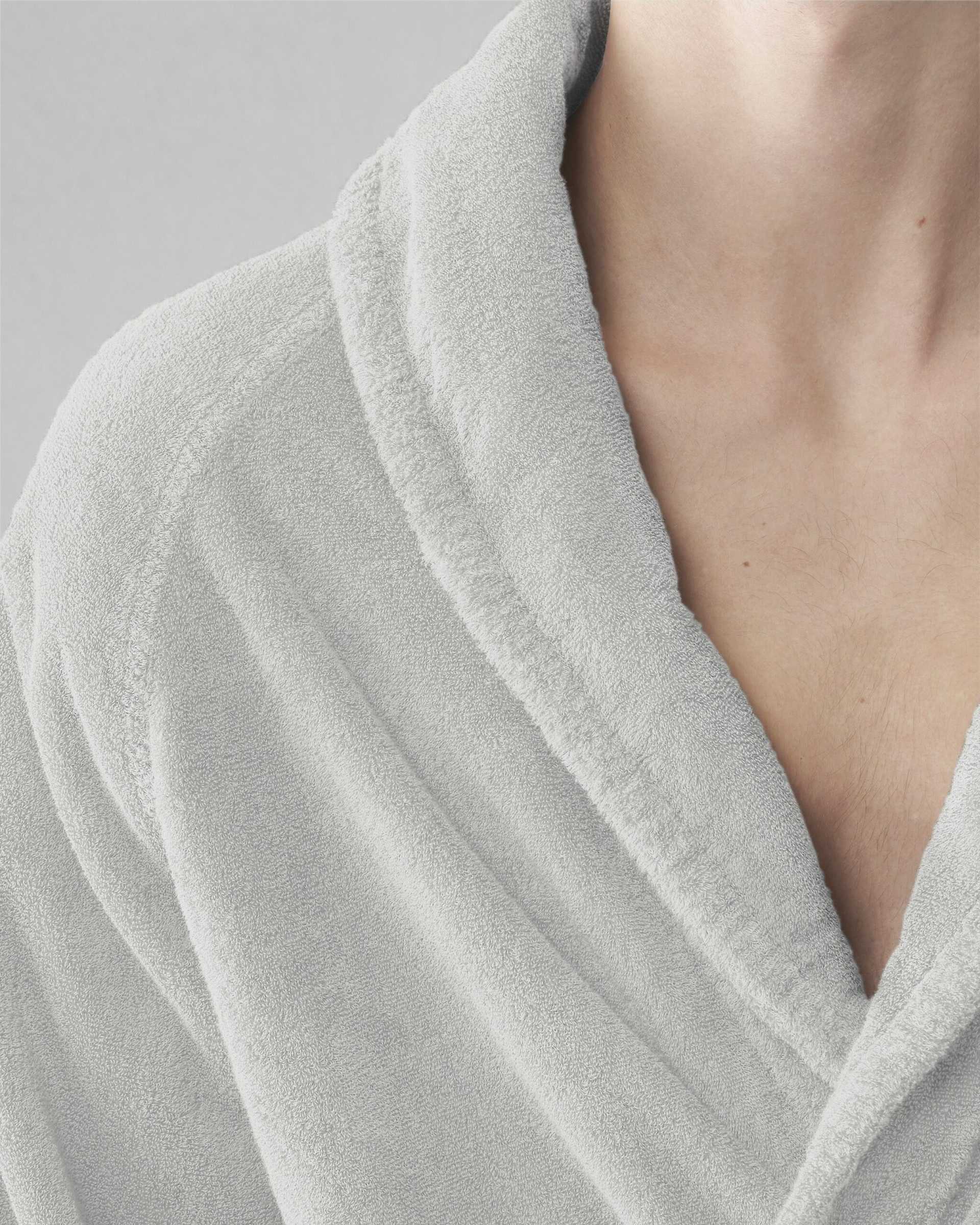
Cotton terry is familiar because its structure is built around loops. Those loops create surface area that can take up moisture, while the underlying cloth gives the garment stability. But terry is not one uniform experience. Loop height, yarn, density, finishing, and garment design all contribute to the final feel. A robe may be plush and enveloping, or lighter and easier to move in; neither quality alone makes it the right choice for everyone.
What cotton terry does
Look closely at a terry towel or robe and its surface resembles a field of tiny loops. These loops can hold water among their fibers, which helps explain why terry is widely used for bath textiles. The fabric’s performance, however, depends on a group of related details. A dense surface may feel substantial, but thickness by itself does not guarantee that a robe will dry quickly or suit a warm bathroom. Likewise, a lighter fabric can still feel soft and absorbent if its yarn and construction are well suited to the task.
In a robe, terry has a double role. It meets the skin and helps manage residual moisture, while also serving as a layer of clothing. The garment must bend at the elbows, sit comfortably across the shoulders, and wrap securely around the body. A towel can be folded and set aside; a robe has to move with its wearer. That difference makes fit and pattern as important as surface texture.
Terms such as “soft,” “plush,” and “absorbent” are useful starting points, not complete descriptions. Softness is partly a tactile impression and can vary with laundering and finishing. Absorbency depends on the textile and its condition, including whether residues from detergent or fabric softener have accumulated. Plushness suggests a fuller surface, but a heavy robe may feel warm and comforting to one person and cumbersome to another.
Rather than looking for one supposedly ideal terry construction, think about the environment in which the robe will be worn. A cool home may make a more substantial layer appealing. In a warm or humid setting, a lighter robe may feel easier to wear. Someone who wants to dry off in the garment may prioritize absorbent terry; someone who dresses soon after bathing may care more about mobility and a comfortable wrap.
Reading fabric weight without overreading it
Fabric weight is often stated in grams per square meter, abbreviated as GSM. The number describes the mass of a given area of fabric; it can help compare textiles, especially within similar product types. But it is not a direct scale of comfort, drying speed, or quality. Two robes with comparable GSM can feel quite different because of variations in yarn, loop structure, finishing, and design.
Weight also interacts with a robe’s intended use. A thick garment may offer a reassuring, cocoon-like feel, yet need more room on a hook and more time to dry between wears. A lighter one may be easier to pack or wear while moving around, but may provide less of the enveloping warmth some people seek. Neither trade-off is a defect: the important point is knowing which qualities matter in your routine.
When a listing provides fabric weight, read it alongside the material description, care guidance, and garment details. Check whether the robe is described as cotton terry, whether the fabric is garment-dyed or otherwise finished, and whether the manufacturer gives instructions for drying. If weight is not listed, avoid assuming that appearance alone reveals performance. A photograph cannot tell you how a fabric feels after a shower or how long it will take to dry in your home.
Try to distinguish the robe’s fabric weight from its total garment weight, too. A long, generously cut robe uses more material than a short one, even if both are made from the same cloth. Sleeve length, collar design, pockets, and the amount of overlap at the front influence how substantial the garment feels in use.
Texture, finishing, and the feel against skin
Texture is one of the first things a wearer notices and one of the hardest things to predict from a label. Terry loops create a soft, dimensional surface, but their feel can vary. Some fabrics feel lofty and cushiony; others have a closer, firmer hand. The way the cotton yarn is spun and the way the loops are formed both contribute to the impression. Finishing can alter the initial hand as well, so a new robe may feel different after several washes.
Garment dyeing, when used, can give fabric a particular color character, but color treatment does not on its own tell you how absorbent or durable the robe will be. The same is true of decorative details. A shawl collar may add coverage and a relaxed silhouette; pockets can be useful for small everyday items; a belt helps adjust the wrap. These choices affect comfort and function even though they do not determine the terry’s moisture performance.
Consider how the robe meets the body. A collar that feels generous when standing may shift when seated. Sleeves that reach the hands may keep the arms warm but get in the way during grooming. A roomy cut can be comfortable for lounging, while a closer fit may suit someone who moves around the house. If sizing information is available, compare it with a robe you already like and pay attention to the garment’s length and sleeve dimensions, not just the letter on the tag.
Skin sensitivity is personal. If a fabric feels irritating, a different surface or a less substantial construction may be more comfortable. Washing before first wear can remove manufacturing residues, though the care label should guide the method. Avoid relying on extra softener as a universal fix: coatings can change how absorbent cotton feels and performs.
Choosing a robe for the routine you actually have
A robe’s best qualities depend on when and where it will be used. Start with the moments it needs to serve. Is it mainly for stepping out of the shower? Is it an extra layer during a slow morning? Will it travel in a suitcase, hang beside a pool, or be worn in a cool bedroom? A clear answer can make the selection easier than trying to find a robe that excels at every possible task.
- For post-shower use: Consider absorbent construction, comfortable coverage, and whether the robe can dry adequately between wears.
- For lounging: Give attention to softness, ease of movement, sleeve length, and how securely the front closes.
- For a warm climate: A less bulky feel may be more comfortable than a heavy, highly enveloping garment.
- For cooler rooms: More substantial terry can offer extra warmth, provided the added weight feels comfortable.
- For travel: Think about bulk, drying time, and how easily the robe fits into the luggage you use.
It is also worth considering the room itself. A robe hung in a crowded, poorly ventilated bathroom may stay damp longer than one placed where air can circulate. If you plan to wear it repeatedly between washes, allow it to dry fully after each use. A robe that feels comfortable but remains damp on its hook can become less pleasant over time.
Brand language can help identify a textile’s intended character, but it should not replace the specifications. For Coyuchi bath robes in particular, use the product’s own materials and care information to confirm what is being offered. Names and descriptions can vary by style; avoid assuming that every robe under a brand shares the same weight, finish, or construction. A careful reader checks the details of the particular garment rather than generalizing from a single collection description.
Care habits that preserve performance
Cotton terry is made for regular use, but the way it is laundered influences its feel. The care label should always take priority, since dyes, trims, and construction can call for specific instructions. Where the label permits, washing with similar colors and using a moderate amount of detergent can help keep routine care straightforward. Too much detergent may leave residue, while bleach or aggressive treatment can damage fibers or alter color.
Fabric softener deserves particular care. It can leave a coating on fibers, and that coating may reduce the way a towel-like surface takes up water. If a robe seems less absorbent after repeated washing, first review detergent amounts and rinse performance rather than immediately adding more finishing products. A thorough rinse, when compatible with the garment’s care instructions, may help remove buildup.
Drying matters, too. Follow the care label’s temperature guidance and avoid excessive heat, which can place unnecessary stress on cotton fibers over time. If using a dryer, remove the robe when it is dry rather than leaving it tumbling longer than needed. If line drying, spread the garment so air can reach its surface, and give the fabric enough time to dry completely before storing it.
Between washes, hang the robe open enough for air to circulate. A narrow hook can leave thick sections folded against each other, slowing evaporation. If the robe has been worn after bathing, letting it dry fully is a simple way to keep it fresher. Wash frequency depends on use, personal preference, and how quickly the garment dries; there is no single schedule that suits every home.
Small signs can guide maintenance. A change in absorbency may point to product buildup. A rougher feel may relate to detergent, hard water, drying conditions, or normal wear. Loose threads should be handled promptly according to the care guidance, and the robe should not be pulled aggressively at seams or belt loops. Ordinary attention can preserve a garment’s usefulness without turning care into a complicated project.
A practical checklist before you decide
Before choosing a robe, compare a few concrete details instead of relying on a single impression. The following checklist can help focus the decision:
- Fiber: Confirm whether the robe is cotton or a blend, and look for clear material information.
- Construction: Check whether it is terry and read any description of the fabric’s surface or density.
- Weight: Treat GSM as a comparison point, not a guarantee of softness or absorbency.
- Fit: Review length, sleeve measurements, and the amount of overlap at the front when those details are provided.
- Features: Decide whether a collar, pockets, or a belt will matter in your daily routine.
- Care: Make sure the washing and drying instructions are realistic for your household.
- Drying space: Consider where the robe will hang and whether it can dry fully between uses.
There is no need to turn the decision into a technical exercise. The purpose of understanding robe fabric is to connect the details on a label with the experience of wearing the garment. A robe that is pleasant in the hand but awkward in the sleeve may not become a favorite. One that is absorbent but too warm for the room may be used less often. Comfort is not a single material property; it emerges from the match between cloth, fit, climate, and habit.
Comfort is built from small decisions
The everyday bath robe has a modest task, but it performs it through a set of carefully balanced qualities. Cotton terry loops offer a familiar, moisture-managing surface. Density and yarn shape the fabric’s hand. Finishing can influence its initial feel, while the cut determines whether it wraps and moves comfortably. Care, in turn, helps preserve the properties that made the robe useful in the first place.
For anyone comparing Coyuchi bath robes, the clearest path is to begin with intended use, then verify the details of the specific style: fiber, construction, dimensions, and care. Let texture and weight inform the choice, but do not treat either as a shortcut for every other quality. The most satisfying robe is not necessarily the heaviest or the softest on a product page. It is the one that fits the room, the body, and the rhythm of the day—and remains easy to care for long after the first wear.
Frequently asked questions
Does thicker cotton terry always absorb more?
No. Thickness can contribute to a substantial feel, but absorbency depends on the fabric’s fibers and construction as well as its condition. Residue from laundry products may also affect how readily cotton takes up moisture.
What does GSM tell me about a robe?
GSM is the mass of fabric per square meter. It offers a useful point of comparison when specifications are available, but does not independently predict softness, drying time, or overall comfort.
How can I help a terry robe stay absorbent?
Follow the care label, use detergent in sensible amounts, and be cautious with fabric softener because coatings can affect absorbency. Let the robe dry fully between wears and avoid unnecessary high-heat drying.
How often should a bath robe be washed?
That depends on how it is used, how quickly it dries, and personal preference. Hang it where air can circulate after each wear, and wash it when it needs refreshing or the care label and household routine indicate.