A practical guide to bath textiles
Coyuchi Bath Towels: Understanding Organic Cotton Weaves and Weight
A towel’s character is written into its fibers and structure. Learn how cotton, weave, and GSM help explain the different balances of absorbency, drying time, and everyday comfort found in organic cotton bath towels.
Published October 11, 2026
In a bathroom, a towel is an ordinary object with an intimate job. It meets damp skin, absorbs water, hangs through the day, and returns to use—often many times a week. Yet towels can feel remarkably different. One may be thick and springy, another light and quick to release moisture; a third may have a crisp, woven texture that becomes more familiar with every wash.
Those differences are not explained by softness alone. Fiber type, yarn, fabric construction, and weight all contribute to the experience. For anyone comparing Coyuchi bath towels or other organic cotton options, understanding these details can make product descriptions easier to interpret and help match a towel to the rhythm of a household.
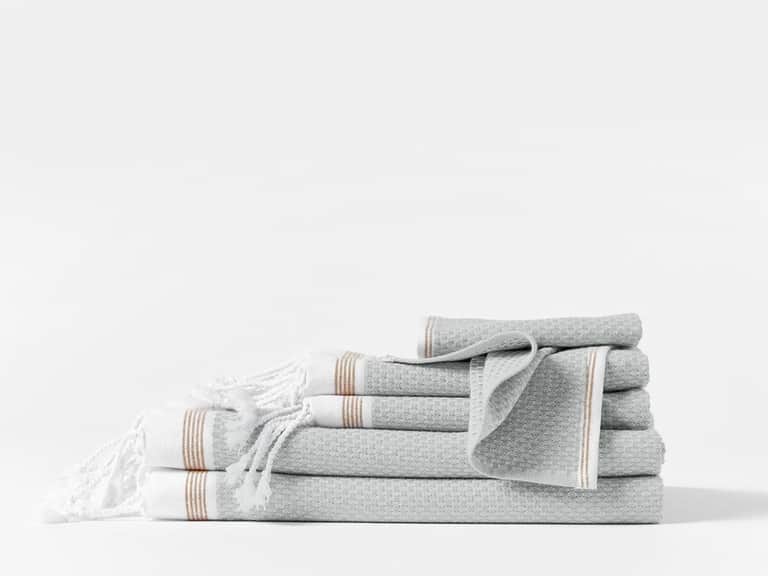
One useful example is Coyuchi Mediterranean Organic Towels. Made from 100% organic cotton grown and woven in Turkey’s Aegean region, the towels use a flat weave, yarn-dyed color, and hand-knotted fringe. Their listed weight is 320 GSM, a relatively light fabric weight that offers a different set of practical qualities from a dense, deep-pile terry towel.
That number does not promise a particular drying experience on its own. GSM is a starting point, not a verdict. To understand how a towel may work in daily life, consider weight alongside construction, absorbency, drying conditions, and care.
First, what does “organic cotton” tell you?
Cotton is a natural plant fiber used in towels because it can absorb moisture and can be spun and woven into many kinds of fabric. The word organic refers to how the fiber is produced and certified, not to one particular towel texture. Organic cotton can appear in a plush terry loop, a flat-woven cloth, or other constructions; the feel and performance depend on the whole textile, rather than the fiber label alone.
When assessing an organic cotton towel, check the information provided about its material, construction, origin, and certifications. These are distinct pieces of information. A product may identify its fiber as organic cotton, describe where it was grown or woven, and name a certification or manufacturing standard. Reading those details separately helps avoid treating a single label as a complete explanation of comfort or performance.
The Mediterranean Organic Towels are described as 100% organic cotton, GOTS certified, and produced in a Fair Trade Certified factory. The product information also identifies the Aegean region of Turkey as the place where the cotton is grown and the towels are woven. These details speak to fiber and production attributes. They do not, by themselves, determine how quickly a towel will dry in a particular bathroom or how plush it will feel against the skin.
Fiber length, yarn preparation, and finishing can influence a textile’s hand, but a shopper should be cautious about assuming that “organic” automatically means softer, more absorbent, or longer-lasting. The clearest assessment comes from looking at the stated construction and care instructions, then considering how that design fits the intended routine.
Terry and flat weave: two different towel structures
Many familiar bath towels are terry cloth. Their raised loops create a deep surface with more exposed fiber area than a smooth, flat fabric. Those loops can hold water and give a towel its characteristic cushioned feel. Terry towels are often chosen by people who enjoy a substantial, enveloping texture, though a thick towel may take longer to dry depending on its weight, airflow, and how it is hung.
A flat weave is built differently. Instead of a dense field of raised terry loops, the yarns form a flatter, more visibly structured surface. This can make the towel feel lighter and less bulky, and it may be easier to fold or pack. Flat-woven towels can still absorb water; their performance simply comes from a different construction. They may feel more textured than plush terry, and their hand can change as the fabric is washed and used.
The Mediterranean Organic Towels use a flat weave and are described as lightweight, absorbent, and quick to dry. Those characteristics make them a useful point of comparison for someone who wants a less bulky towel or prefers a woven texture. The 320 GSM specification reinforces that the fabric is relatively light, but it should be read together with the flat construction—not as a standalone forecast of exactly how the towel will behave at home.
There is no universally superior weave. A towel used in a humid bathroom with limited ventilation has different demands from one used in a well-aired room or packed for travel. A person who likes a soft, deep pile may gravitate toward terry. Someone who values a lighter profile, a more pronounced woven texture, or easier storage may prefer a flat weave. The best choice is the one that suits both touch and routine.
GSM: a useful clue, not a complete answer
GSM means grams per square meter. It describes the mass of fabric over a standard area and is commonly used to compare towel weights. A higher GSM generally indicates a heavier or denser fabric, while a lower GSM usually signals a lighter one. As a broad guide, lighter towels often feel less bulky and can be convenient where storage and drying time matter; heavier towels may feel more substantial and plush.
But GSM does not directly measure absorbency, softness, quality, or durability. Two towels with similar GSM can feel unlike one another because their fiber, yarn, weave, pile, and finishing differ. A terry towel and a flat-weave towel at the same stated weight would not necessarily offer the same surface or sensation. GSM is most useful as one comparison point within a fuller description.
At 320 GSM, the Mediterranean Organic Towels occupy a lighter-weight position compared with many thick, high-pile bath towels. That figure is consistent with the product’s flat-woven construction and emphasis on a lightweight, quick-drying feel. It does not mean the towel is intended to be ineffective at drying; rather, it signals a different balance of bulk and fabric weight from a plush, heavy terry style.
Consider the setting, too. A towel that dries quickly in a breezy, well-ventilated room may take much longer on a crowded hook in a humid space. How fully it is spread out, how often it is used, and how much air circulates around it all matter. In practical terms, a towel’s lived performance emerges from the meeting of textile and environment.
Absorbency and drying time work together
Absorbency is often the first quality shoppers notice, but it is only one part of the cycle. A towel takes moisture from the body, then needs to release that moisture into the surrounding air before it is ready to use again. A fabric that feels highly absorbent may also hold water longer, especially if it is thick, folded, or hung where air cannot move freely. A lighter towel may dry more readily in suitable conditions, but can feel less plush or substantial.
There is no simple rule that a higher GSM always absorbs better, or that a lower GSM always dries faster. Fiber and construction matter, as do the towel’s dimensions and the conditions in which it is used. The manufacturer’s description can help establish intended qualities, while everyday experience reveals how those qualities translate to a particular household.
For a quick comparison, ask three questions:
- How does it feel? Do you prefer a soft, looped pile or a flatter, more textured surface?
- Where will it dry? Is there room to spread the towel out, and does the bathroom have adequate airflow?
- How often will it be used? A busy household may benefit from having enough towels to rotate while each one dries fully.
With the Mediterranean Organic Towels, the product details point to a lightweight flat weave and a 320 GSM fabric. Those features may appeal to someone seeking a less bulky towel. The product also specifies machine washing in cold water on a gentle cycle with like colors, followed by tumble drying on low. Following the stated instructions helps keep care consistent with the fabric’s construction.
Color, edges, and the details of construction
Not every useful feature is captured by a number. A towel’s edge finishing can affect how it looks and how it is handled, while color and surface texture shape how it sits in a room. The Mediterranean Organic Towels are yarn-dyed, which means color is part of the yarn before weaving rather than applied only as a surface print. Their hand-knotted fringe provides a distinctive edge detail associated with the flat-woven design.
These details should be understood as construction and appearance choices—not guarantees that a towel will never fade, snag, or change with use. Care remains important. Washing with like colors, using a gentle cycle, and drying on low are the listed instructions for this towel. Avoid improvising with harsh treatments or excessive heat when the product guidance recommends a gentler approach.
Before purchasing any bath towel, it can help to check its dimensions and what is included in the set, as well as its fabric description. A coordinated set may include more than bath towels; the Mediterranean set is described as including two bath towels, two hand towels, and two wash cloths. Confirming the contents is especially useful when replacing only one part of a bathroom collection or planning for a household with several users.
Choosing a towel for your routine
Begin with the way you want a towel to feel. If plushness and a cushioned surface are central, a terry construction may be the more natural place to look. If you want a lighter, more compact textile with a clearly woven texture, a flat weave may be worth considering. Neither preference is more correct; each describes a different relationship between fabric, body, and bathroom.
Next, think about drying space. In a small bathroom, several thick towels may crowd hooks and take longer to air out. A lighter towel can be easier to manage, but it still needs room and airflow. Spreading a towel out after use is more helpful than leaving it bunched, whatever its GSM. If the room remains humid, ventilation and laundering habits are part of the overall towel-care picture.
Then compare material and care. Organic cotton may be important to you for sourcing reasons, while the weave and care label help explain what maintaining the towel entails. Check whether colors should be separated, whether a gentle cycle is recommended, and what drying temperature is specified. Straightforward care can make a meaningful difference when a textile is used and washed regularly.
Finally, treat GSM as context. It can help distinguish lighter from heavier fabrics, but avoid selecting a towel by weight alone. Read the product description in full: fiber content, weave, origin, dimensions, set contents, certifications, and care instructions each answer a different question. Together, they form a more useful picture than any single claim about softness or performance.
A considered example: Mediterranean Organic Towels
The Coyuchi Mediterranean Organic Towels bring several of these considerations together. Their product details specify 100% organic cotton, a flat weave, 320 GSM weight, yarn-dyed color, and hand-knotted fringe. The towels are grown and woven in Turkey’s Aegean region, are GOTS certified, and are made in a Fair Trade Certified factory. The set includes two bath towels, two hand towels, and two wash cloths.
As a result, shoppers can assess the set through several distinct lenses. The fiber and certifications relate to sourcing and production standards. The flat weave and 320 GSM describe a lightweight, less bulky construction. The care instructions—cold machine wash on a gentle cycle with like colors, then tumble dry low—offer practical guidance for routine laundering. The combination is more informative than the word “organic” or a GSM figure on its own.
Whether this kind of towel suits you depends on what you value. Someone drawn to deep terry loops and a heavy, wrapped-in-warmth feeling may prefer a different construction. Someone who wants a woven texture and a lighter towel may find the flat weave appealing. Comparing those preferences before choosing can prevent a mismatch between a product’s design and the habits of the people using it.
A simple checklist for comparing bath towels
When product descriptions begin to blur together, use this short checklist to bring the decision back to practical details:
- Fiber: What is the towel made from, and are any sourcing or certification claims clearly stated?
- Weave: Is it terry, flat woven, or another construction? What kind of surface do you prefer?
- Weight: Is the GSM listed? Use it to compare relative fabric weight, not to predict every performance quality.
- Routine: Can the towel dry fully between uses in the space available?
- Care: Do the wash and drying instructions fit your household’s laundry habits?
- Set details: Check size, quantity, and the number of bath towels, hand towels, or wash cloths included.
The useful conclusion is balance
A bath towel is a small textile, but its performance depends on several decisions made before it reaches the bathroom. Cotton type describes the fiber; weave describes how the fabric is built; GSM gives a measure of weight. None of these alone tells the whole story. Absorbency, drying time, comfort, and care emerge from the way those qualities work together in a particular home.
For Coyuchi bath towels and other organic cotton choices, begin by reading the construction carefully. A flat-woven towel at 320 GSM offers a different proposition from a thick terry towel, even if both are made from cotton and intended for bathing. One may feel lighter and less bulky; another may offer the familiar loft of raised loops. The right comparison is not simply “which is best?” but “which qualities fit how I use, dry, wash, and store a towel?”
That question turns a specification sheet into a practical guide. Weigh fabric, weave, care, and the realities of your bathroom together, and the details become easier to interpret. The result is a more considered choice—one that feels right not only on the first use, but across the everyday cycle of dampness, air, laundering, and return.
Frequently asked questions
Does higher GSM always mean a better bath towel?
No. Higher GSM indicates greater fabric weight per square meter, but not necessarily better absorbency, faster drying, or greater comfort. Weave, fiber, and how the towel is used all matter.
Are flat-weave cotton towels absorbent?
They can absorb moisture, but their surface and feel differ from terry towels. A flat weave generally has a more visible woven texture and less raised pile. Product construction and care information are useful guides to a specific towel.
What does 320 GSM suggest?
It identifies a relatively lightweight fabric compared with many heavier bath towels. It does not, by itself, determine absorbency or drying time. The Mediterranean Organic Towels pair their 320 GSM weight with a flat weave.
How should the Mediterranean Organic Towels be washed?
The listed care instructions recommend a cold machine wash on a gentle cycle with like colors and tumble drying on low. Follow the product’s current care label for the most accurate guidance.